
FDDRL also supports the disk set save entity. Here multiple disks form a save entity which FDDRL saves on common MTC (tape set) (disk transition without change of tape). The disk set save entity makes optimum use of the tape cartridge capacity and significantly reduces the number of cartridges used.
FDDRL generates the disk set save entity in the following cases:
In the case of DUMP-DISK, more than one disk is specified in the DISK operand.
In the case of DUMP-PUBSET, the SAVE-ENTITY=*DISK-SET operand is specified. The number of disk sets can also be specified (the default is NUMBER-OF-DISK-SETS=1).
An FDDRL job is created for each disk and for each disk set.
The disk set save entity requires at least V16 tape format (the FDDRL parameter TAPE-FORMAT=*STD presets V17 tape format). Disk set saves can therefore be restored only using FDDRL V16.0A or V17.0A or higher.
RELOAD-DISK enables all, some or single disks of a disk set save to be restored.
The entire pubset can be restored using the RELOAD-PUBSET statement. If it was only possible to restore some of the disks using RELOAD-PUBSET because of disruptions in operation, restoration of the rest of this pubset’s disks can be performed later with RELOAD-DISK. The use of RELOAD-DISK instead of RELOAD-PUBSET prevents disks that have already been created successfully from being restored again.
With the disk set save entity, an FDDRL job is created for each disk and each disk set. Each disk set is processed by an FDDRL subtask (when PROCESS-JOBS= *MAINTASK, by the main task).
Number of disk sets with DUMP-PUBSET
With DUMP-PUBSET you use the NUMBER-OF-DISK-SETS operand to specify the number of disk sets and consequently the number of tape sets generated. In this way you control the size (number of tapes) of the tape sets and the parallelism required for the save. The number should not exceed the value specified by the FDDRL parameter TASK-LIMIT, otherwise tapes will be used for empty disk sets.
You should avoid more than 255 tapes being required for saving a disk set because MAREN can only accommodate a maximum of 255 tapes in a tape set.
If multiple disk sets are generated with DUMP-PUBSET (NUMBER-OF-DISK-SETS >1), the assignment of disk to disk set is not predictable because this is defined dynamically in the save run so as to ensure that an equal load is placed on the subtasks.
Example of saving a pubset using multiplexing (multiplexing level 2)
Pubset A, which consists of 5 disks, is saved to a tape set:
//DUMP-PUBSET PUBSET=A,SAVE-ENTITY=*DISK-SET
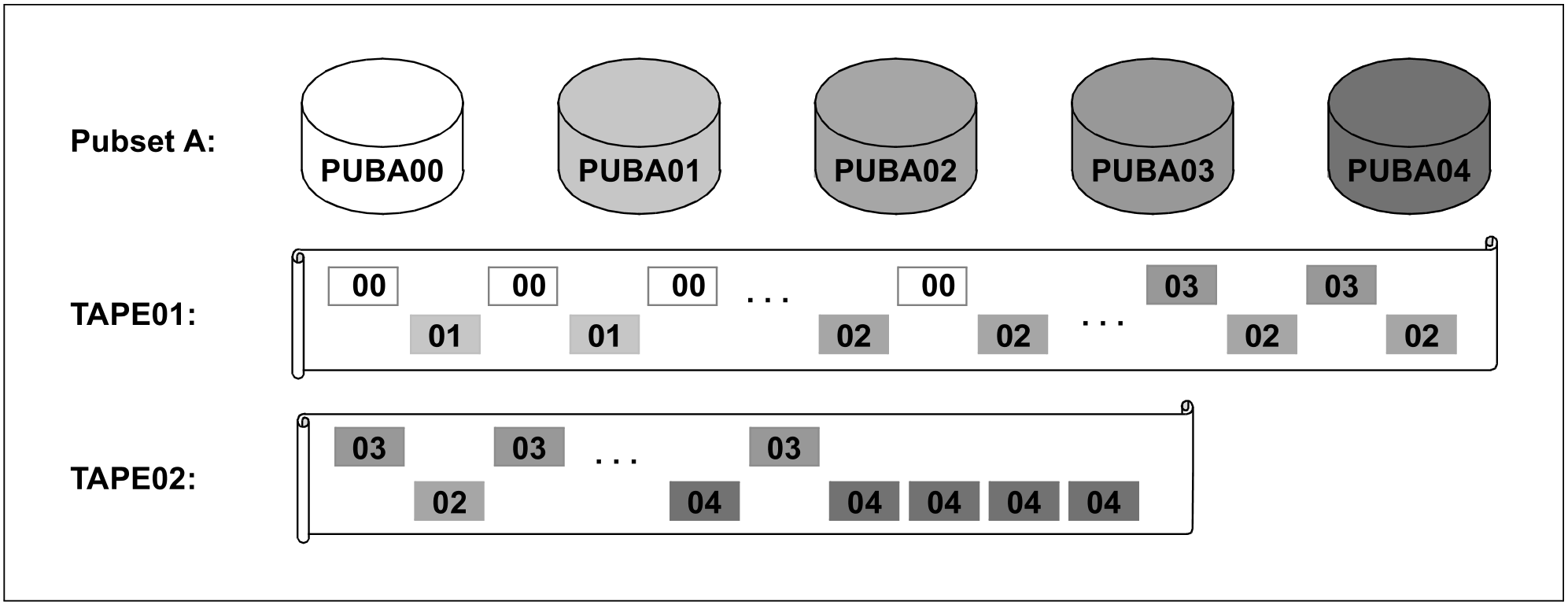
Figure 2: Saving a pubset as a disk set to a tape set using multiplexing level 2
Example of saving a pubset as disk sets to 2 tape sets
Pubset A, which consists of 5 disks, is saved to two tape sets:
//DUMP-PUBSET PUBSET=A,SAVE-ENTITY=*DISK-SET(NUM-OF-D-SETS=2)
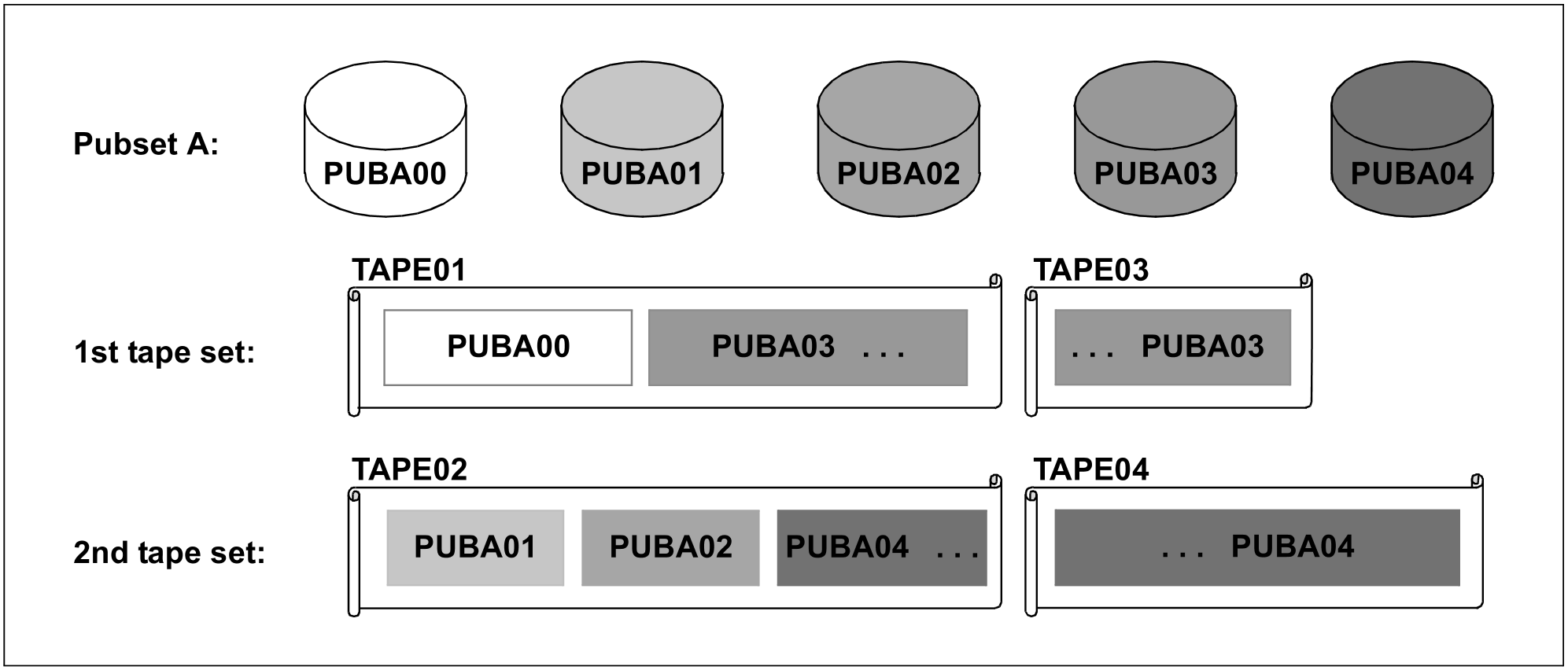
Figure 3: Saving a pubset as a disk set to 2 tape sets
In order to make the example more straightforward, the merging of the disk data through multiplexing is not shown.